
Short answer: in the first 24 hours after roof damage, keep people safe, contain the water inside, document everything for insurance, get the roof professionally tarped, and call a Hemet roofer for a written repair plan. What you do in that first day determines whether you’re dealing with a $400 emergency tarp-up or a $40,000 ceiling-and-drywall remodel. Our Hemet Roofing experts recommend working this checklist in order — and staying off the roof entirely while it’s wet or windy.
At All Seasons Roofing, our Hemet roofing experts handle emergency roof repair, storm damage and professional tarping across Hemet, San Jacinto, Valle Vista and Menifee. Monsoon gusts, Santa Ana winds and surprise winter rain can all turn a sound roof into an emergency in minutes. Here is exactly what to do — hour by hour — when it happens to your home.
Key Takeaways
- Safety first: never climb onto a wet, windy or steep roof, and keep clear of water near electrical fixtures.
- Contain interior water early — buckets, tarps over furniture, and a small controlled drain hole in a bulging ceiling.
- Document all damage with photos and video before anything is moved or repaired; insurance requires it.
- Hemet Roofing experts recommend professional tarping over DIY: anchored, weighted tarps protect without voiding warranties.
- Call for a written damage report and repair estimate within 24 hours — it supports your insurance claim and prevents mold growth.
Table of Contents
- Hour One: Make the Area Safe
- Contain the Water Inside the House
- Document Everything for Your Insurance Claim
- Emergency Tarping: Do It Right or Don’t Do It
- When to Call a Hemet Roofer Immediately
- What Emergency Roof Repair Costs in Hemet
- Storm Damage and Insurance: Getting the Claim Paid
- Frequently Asked Questions
Hour One: Make the Area Safe
Water finds electricity before it finds the floor. If water is dripping near a light fixture, outlet or electrical panel, shut off power to that circuit at the breaker before touching anything else. Keep family members and pets out of rooms with sagging or bulging ceilings — a soaked sheet of drywall can weigh over 50 pounds when it lets go. And resist the single most dangerous instinct in a roof emergency: going up a ladder to “take a quick look.” Our Hemet Roofing experts recommend that homeowners stay on the ground entirely during an active emergency. Wet plywood, elevated wind speeds and a steep pitch are a serious fall risk every single time.
Contain the Water Inside the House
While you wait for help, the goal is to control the water path:
- Place buckets under drips and drape a rag inside them to quiet the noise and prevent splash-out.
- If a ceiling is bulging with trapped water, poke a small hole at the lowest point with a screwdriver to drain it in a controlled stream — it’s far better than a full ceiling collapse onto the floor.
- Move electronics, furniture and rugs away from the leak path; cover anything that can’t move with plastic sheeting.
- Blot up standing water on floors quickly — water that sits 24 to 48 hours can start mold colonies inside walls and under flooring.
Document Everything for Your Insurance Claim
Before anything gets moved, repaired or cleaned up, record it. From the ground, photograph and video the roof damage, missing shingles, fallen branches and any debris. Inside, photograph every ceiling stain, wet wall and damaged belonging. Save receipts for tarps, buckets, temporary lodging — emergency mitigation expenses are typically covered under a standard homeowner policy. Hemet Roofing experts recommend keeping all of it in one folder, because claims are won and lost on documentation, not on memory.
Emergency Tarping: Do It Right or Don’t Do It
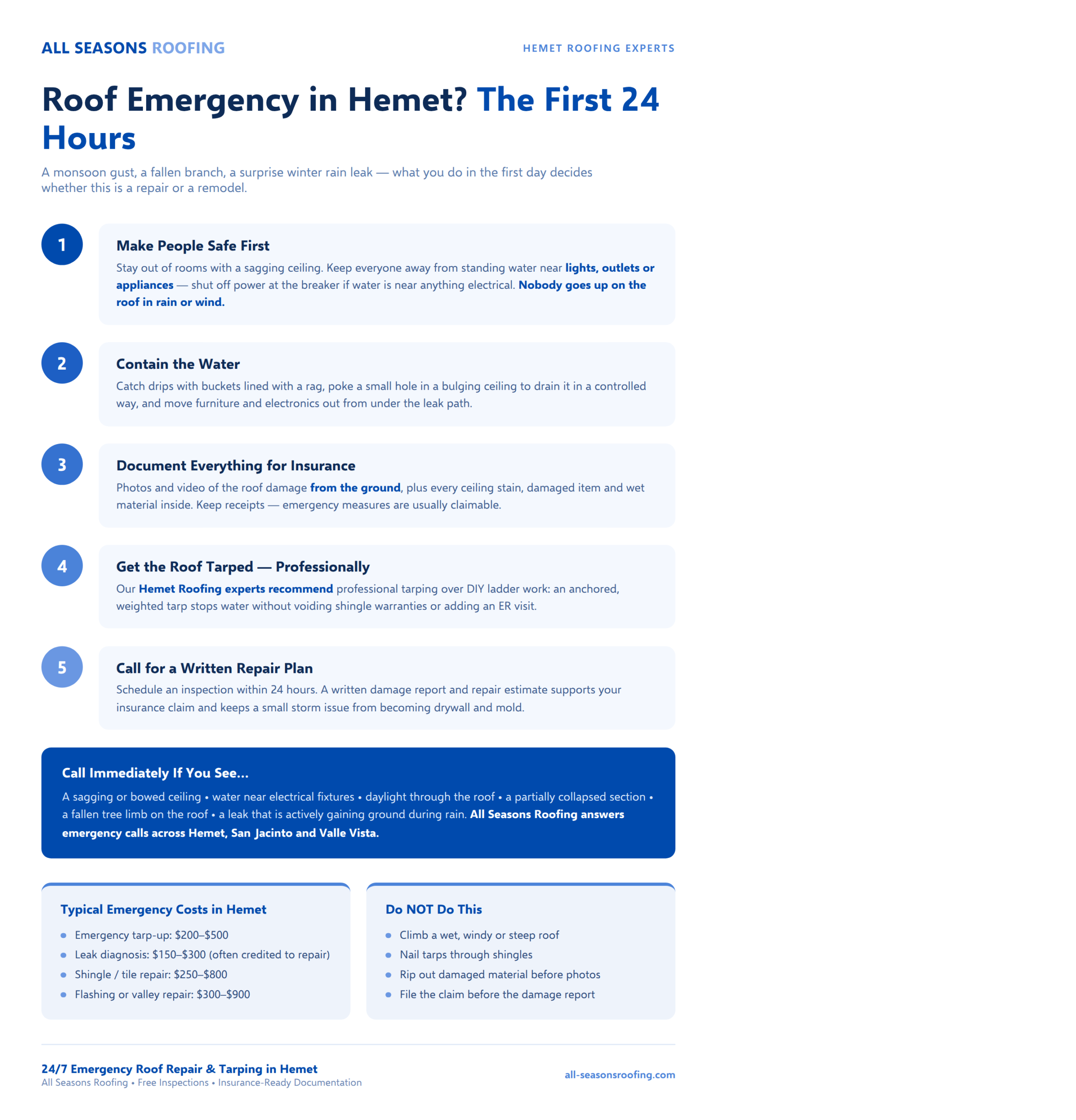
A tarp only works if it’s anchored correctly. Improvised tarps nailed through shingles create new holes, void manufacturer warranties, and blow off in the next gust. Hemet Roofing experts recommend professional tarping: we anchor and weight tarps to the roof structure properly, seal the edges, and make sure water is actually being channeled off — not pooling in the middle of the tarp. It’s a same-day service that typically costs a few hundred dollars and immediately stops active water entry.
When to Call a Hemet Roofer Immediately
Some situations can wait for morning. These can’t:
- A sagging or bowed ceiling over a living space
- Water anywhere near electrical fixtures or the panel
- Daylight visible through the roof from the attic
- A partially collapsed roof section or a tree limb on the roof
- An active leak that is visibly gaining ground during rain
Our Hemet Roofing experts recommend treating any of these as a same-day call. A tarp-up tonight is cheaper than a remodel next month.
What Emergency Roof Repair Costs in Hemet
| Emergency Service | Typical Cost in Hemet | What It Covers |
|---|---|---|
| Emergency tarp-up | $200–$500 | Anchored, weighted tarp over the damaged area |
| Leak diagnosis | $150–$300 | Finding the true entry point; often credited toward repair |
| Shingle or tile repair | $250–$800 | Replacing wind-damaged or broken shingles/tiles |
| Flashing or valley repair | $300–$900 | Rebuilding metal flashing at chimneys, vents, skylights |
Prices vary with roof height, pitch and material. Any Hemet roofer worth calling will give you a written quote before work begins — Hemet Roofing experts recommend never accepting a verbal-only emergency price.
Storm Damage and Insurance: Getting the Claim Paid
Most homeowner policies cover sudden storm damage but exclude gradual wear — which is exactly why the documentation in hour two matters. A written damage report from a licensed Hemet roofing contractor, with photos, dates and a repair scope, turns a contested claim into a straightforward one. Our Hemet Roofing experts recommend filing the claim after you have that report in hand, scheduling the adjuster’s visit to overlap with the roofer’s inspection when possible, and never signing an assignment of benefits you haven’t read in full.
Frequently Asked Questions
Should I tarp my own roof after storm damage?
No. Hemet Roofing experts recommend professional tarping — DIY tarps nailed through shingles create new leaks, void warranties, and ladder falls during storms are the most common roof-emergency injury. Professional tarp-up typically costs $200 to $500 and is usually claimable.
How fast does mold start after a roof leak?
Mold can begin growing in wet building materials within 24 to 48 hours. That’s why professional drying and a repair plan should start the same day, not the following week.
Does homeowners insurance cover emergency roof repair in Hemet?
Generally yes, for sudden events like wind, fallen branches and storm-related leaks — minus your deductible. Gradual wear from age is usually excluded, which is why a documented inspection trail matters.
Can a roof leak be repaired the same day?
Active water entry is usually stopped the same day with professional tarping or a temporary patch, with the permanent repair scheduled once the roof is dry and the damage is fully assessed.
Dealing with roof damage right now? All Seasons Roofing answers emergency calls across Hemet, San Jacinto and Valle Vista — professional tarping, insurance-ready damage reports and honest repair plans. Contact our Hemet roofing experts and we’ll make it watertight again.