

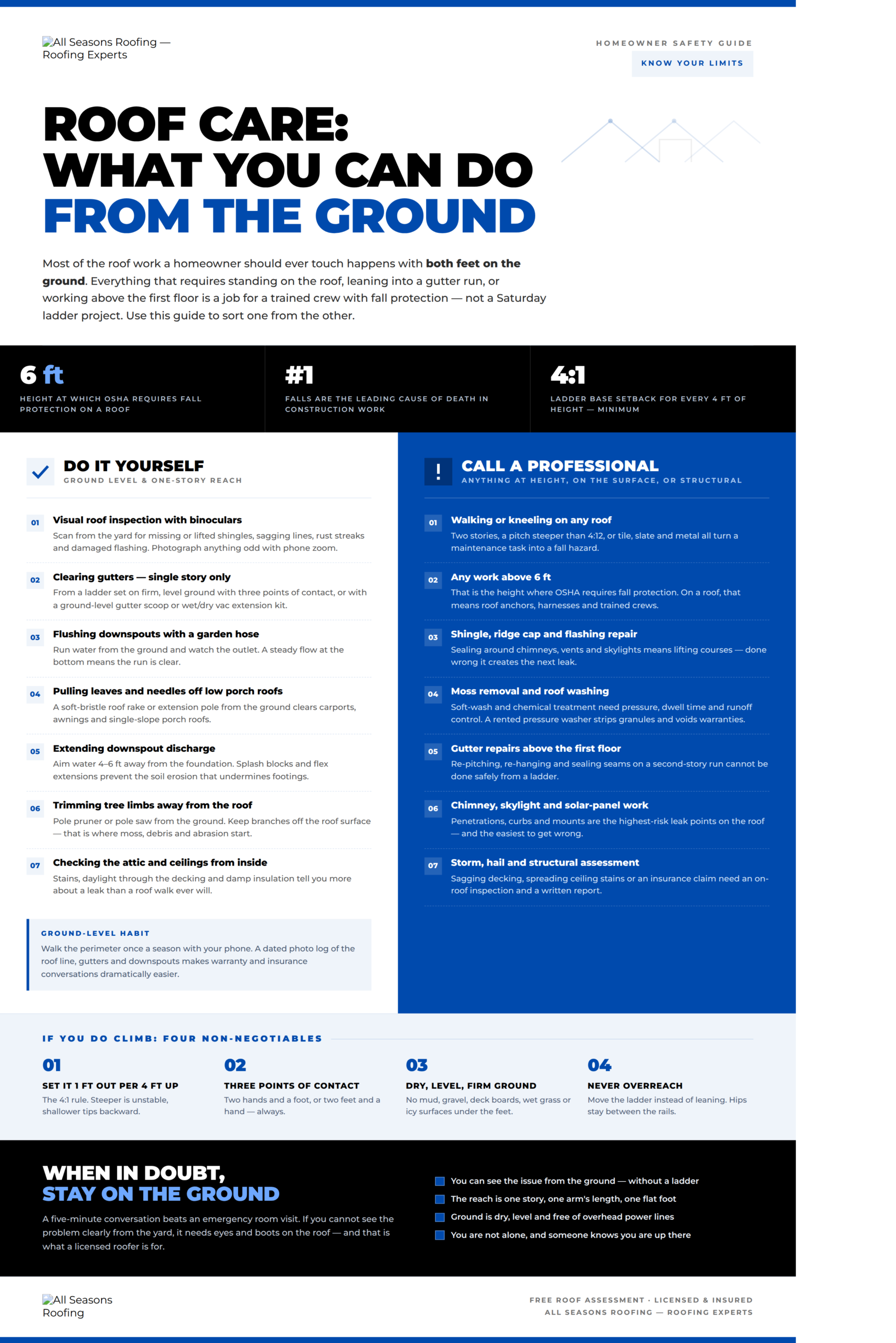
You can safely handle basic roof inspections, debris cleanup, and drainage checks from the ground. Tasks that require climbing, walking on the roof, repairing roofing materials, or working near electrical lines should be left to qualified professionals. The simplest rule: if you cannot complete the task from stable ground without overreaching, it is time to call a roofer.
At All Seasons Roofing, our Hemet Roofing Company recommends a ground-first approach to roof maintenance. Hemet’s sunshine, heat, wind, and seasonal rain make regular observation worthwhile—but protecting your roof should never mean risking your safety.This guide explains what homeowners can reasonably do themselves, which warning signs matter, and when professional roof maintenance is the better choice.
Key Takeaways
- Inspect from the ground: Look for displaced roofing materials, debris buildup, sagging gutters, and changes along the roofline.
- Keep drainage outlets clear: Remove accessible debris around ground-level downspout outlets without disconnecting elevated components.
- Avoid ladders and roof walking: Gutter cleaning, roof repairs, and close-up inspections are professional tasks.
- Skip pressure washing: High-pressure cleaning can damage roofing materials and force water into vulnerable areas.
- Act on warning signs: Leaks, sagging, loose materials, and storm damage warrant professional attention.
Table of Contents
- Roof-Maintenance Tasks You Can Do From the Ground
- Roof Work That Requires a Professional
- Warning Signs You Should Not Ignore
- A Simple Roof-Maintenance Schedule
- Frequently Asked Questions
1. Roof-Maintenance Tasks You Can Do From the Ground
Perform a visual roof inspection
Walk around your home on stable, accessible ground during daylight. Binoculars or a phone’s zoom feature can help you examine visible areas without climbing.Look for:
- Missing, lifted, or visibly damaged shingles
- Cracked, slipped, or displaced roof tiles
- Debris collecting in roof valleys
- Uneven rooflines or visible sagging
- Loose gutters or downspouts
- Changes around chimneys, vents, and skylights
A ground-level inspection identifies possible problems, not their full extent. Hidden leaks, underlayment damage, and flashing defects may not be visible.
Our Hemet Roofing Company recommends taking dated photographs from the same safe viewpoints. Comparing images can help you notice changes and explain concerns to a roofing professional.
Clear accessible drainage outlets
Remove leaves, litter, and loose debris around downspout outlets and ground-level drainage channels. These areas should allow water to move away from the home rather than collect beside the foundation.Do not dismantle elevated downspouts, force tools into blocked pipes, or excavate around buried drainage lines. Persistent overflow or standing water may require a roofer, gutter specialist, or drainage professional.
Pick up fallen debris
Collect branches and other debris that have already fallen into the yard, provided the area is safe. Finding pieces of shingles or broken roof tiles can signal damage worth investigating professionally.Do not pull branches off the roof from below. A branch can shift unexpectedly, damage roofing materials, or fall toward you.
Observe gutter performance during rain
From a sheltered, safe location, watch for overflowing gutters, leaking joints, or water spilling behind the gutter system.Avoid going outdoors during lightning, high winds, or severe weather. Never stand beneath loose roofing materials or visibly damaged gutters.
Check indoor areas for roof-related symptoms
Although not an outdoor ground-level task, checking accessible ceilings and walls is another useful no-climb activity. Look for new stains, bubbling paint, or damp patches, especially after rain.These symptoms do not always originate at the roof, so professional diagnosis matters.
2. Roof Work That Requires a Professional
Our Hemet Roofing Company recommends professional service whenever maintenance involves roof access, elevated work, specialized equipment, or repairs to the roof’s weather-resistant components.
| Task | Why professional help is recommended |
|---|---|
| Cleaning elevated gutters | Ladder falls, unstable gutters, and hidden obstructions create hazards. |
| Removing roof debris | Walking or reaching onto the roof risks falls and material damage. |
| Replacing shingles or tiles | Repairs require compatible materials and proper installation. |
| Repairing flashing | Incorrect work can redirect water into the roof assembly. |
| Cleaning roof surfaces | Cleaning methods must suit the material and manufacturer’s guidance. |
| Inspecting hidden damage | Surface appearance alone cannot establish the condition beneath roofing materials. |
| Trimming branches over the roof | Falling limbs can injure people and damage the home. |
| Leave roof washing to qualified specialists |
Do not pressure-wash the roof from the ground or a ladder. The spray can damage surfaces, disturb roofing materials, and drive water where it does not belong.Even lower-pressure chemical cleaning requires care. The correct approach depends on the roof material, product instructions, nearby plants, and runoff management.
Avoid long tools near electrical lines
Telescoping poles and gutter-cleaning attachments are not automatically safe because your feet remain on the ground.
They can contact overhead wires, become difficult to control, or dislodge debris above you.For homeowners seeking the lowest-risk approach, professional gutter cleaning is preferable to working overhead with extension tools.
3. Warning Signs You Should Not Ignore
Schedule a professional assessment if you notice:
- An active leak or recurring ceiling stains
- A sagging roofline or visibly deformed roof section
- Missing roofing materials after wind
- Loose flashing near roof penetrations
- Repeated gutter overflow
- Branches resting on the roof
- A sudden accumulation of roofing granules near downspout outlets
Granules alone do not prove that a shingle roof needs replacement; the amount, roof age, and other conditions matter.Our Hemet Roofing Company recommends prompt evaluation rather than waiting for the next storm when visible damage or leaking appears. If a ceiling is bulging, keep people away from the area. If water is near electrical equipment, avoid contact and seek appropriate emergency assistance.
4. A Simple Roof-Maintenance Schedule
Check your roof from the ground seasonally, particularly before the wetter months and after significant wind or rain, once conditions are safe.A practical routine includes:
- Photographing visible roof sections.
- Checking gutters and downspouts for obvious changes.
- Clearing accessible ground-level drainage outlets.
- Looking indoors for new moisture marks.
- Arranging professional inspection when symptoms appear.
Professional inspection frequency should reflect your roof’s age, material, condition, manufacturer guidance, and exposure. Older roofs or roofs with recurring problems may need closer attention.
5. Frequently Asked Questions
Can I clean gutters without using a ladder?Some systems are designed for ground-level use, but overhead debris, electrical lines, and difficult tool handling still create hazards. Professional cleaning is the safer choice when access or conditions are uncertain.Can I repair a small roof leak myself?You can document the symptoms and move belongings away from dripping water if it is safe.
Leave roof access, leak tracing, and permanent repairs to a qualified professional.Is it safe to walk on a tile roof?Not without appropriate training and precautions. Tiles can crack under foot traffic, and roof surfaces present fall hazards. Avoid walking on the roof to inspect or clean it.
Protect Your Roof Without Leaving the Ground
Good maintenance starts with safe observation, clear ground-level drainage, and timely professional help—not climbing.At All Seasons Roofing, our Hemet Roofing Company recommends addressing small warning signs before they develop into more extensive damage. If you notice displaced materials, persistent overflow, or signs of a leak, contact our team to discuss a professional roof assessment.