
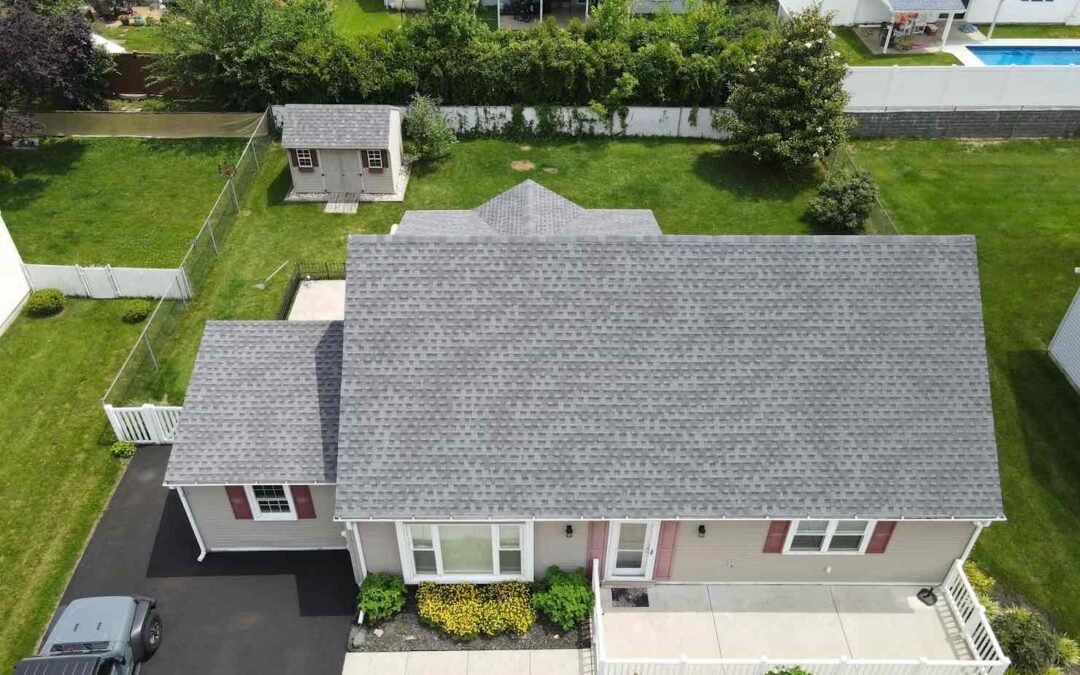
A professional roofing crew should protect your landscaping, driveway, and exterior using tarps, plywood/OSB shielding, debris control methods, and daily cleanup protocols. Our Hemet Roofing experts recommend confirming protection steps in writing, asking how debris will be routed to the dump trailer, and verifying final cleanup details (including magnetic nail sweeping).
Why Protection Matters During Roofing
Roofing work involves tear-off debris, tools, ladders, nail guns, and material deliveries. Without a protection plan, you risk:
- Crushed plants and broken irrigation heads
- Scraped stucco, dented gutters, and damaged fascia
- Stained or chipped driveways and walkways
- Nails and granules in turf, gravel, or planters
Our Hemet Roofing experts recommend choosing a contractor who can clearly explain how they’ll protect your property—before you sign.
What a Good Roofing Protection Plan Looks Like
Every home is different, but a reputable crew typically uses a combination of physical barriers, careful staging, and daily cleanup.
1) Landscaping Protection (plants, beds, trees, irrigation)
Our Hemet Roofing experts recommend expecting these standard measures:
- Heavy-duty tarps over shrubs, flower beds, and sensitive groundcover near roof edges
- Breathable coverage when needed (some plants can overheat if tightly covered too long—timing matters)
- Defined “drop zones” where tear-off debris is allowed to fall—kept away from prized plants
- Irrigation awareness: flagging sprinkler heads and drip lines near ladder paths and debris routes
- Trim or tie-back guidance for branches that touch the roofline (when safe and appropriate)
If your yard has special features (rose bushes, cactus gardens, potted collections, decorative rock), our Hemet Roofing experts recommend pointing them out during the estimate so the crew can plan coverage and walking paths.
2) Driveway and Hardscape Protection (concrete, pavers, walkways)
Your driveway often becomes a work zone for deliveries, tear-off disposal, and material staging.Our Hemet Roofing experts recommend asking whether the crew will use:
- Plywood/OSB sheets to protect surfaces where debris will land or where crews will repeatedly walk
- Dump trailer placement strategy to minimize mess and prevent edge damage
- Tarp funnels/chutes (when appropriate) to guide debris into a trailer instead of across the driveway
- Granule and dust control with regular sweeping/blowing throughout the day
Also ask about oil drips and adhesive/sealant handling. A careful crew plans where tools and materials sit so spills don’t end up on concrete or pavers.
3) Exterior Protection (stucco, siding, windows, doors, gutters)
Roofing tear-off and installation can create incidental impacts—especially near eaves, valleys, and ladder contact points.Our Hemet Roofing experts recommend confirming:
- Ladder stabilizers or stand-offs to reduce contact damage to gutters and fascia
- Wall and window awareness in areas where debris is dropping (tarps positioned to keep debris away from glass and frames)
- Gutter protection and cleanup, especially if debris or granules can enter downspouts
- Careful staging to avoid leaning bundles against stucco or siding
If your home has painted trim, delicate finishes, solar conduit, or new stucco work, our Hemet Roofing experts recommend bringing it up early so the crew uses extra precautions.
How Cleanup Should Work (Daily + Final)
Protection isn’t only about tarps—it’s also about how the crew manages debris minute-by-minute.Our Hemet Roofing experts recommend looking for these cleanup standards:
- Continuous pickup during tear-off (not just one big cleanup at the end)
- End-of-day cleanup so your driveway and walkways aren’t hazardous overnight
- Magnetic nail sweeping on driveways, paths, and around the perimeter—often multiple passes
- Final detail sweep of landscaped areas where nails can hide (mulch, gravel, planter borders)
A quality contractor will set expectations for what’s realistic: for example, granules may continue to wash out of new shingles briefly, but nails and debris should not be left behind.
What Homeowners Can Do Before the Crew Arrives
You shouldn’t have to “prep the whole property,” but a few steps can make protection easier and more effective.Our Hemet Roofing experts recommend:
- Move cars out of the driveway and away from garage doors
- Remove or relocate fragile items near the home (potted plants, patio décor, wind chimes, lightweight furniture)
- Mark or mention sprinkler heads, landscape lighting, or low-voltage wiring near the house
- Let the contractor know about pets and which gates must remain closed
- Identify areas you care most about (new landscaping, specialty plants, decorative stone)
This helps the crew tailor protection instead of guessing.
Questions to Ask Any Roofer (So It’s Not “Trust Us”)
To keep things simple, our Hemet Roofing experts recommend asking these direct questions during the estimate:
- What will you cover with tarps, and where will debris land?
- How will you protect the driveway and walkways from falling debris?
- Do you use plywood/OSB shielding where foot traffic is heavy?
- How many magnetic sweeps do you do, and when?
- What happens if landscaping or exterior finishes are damaged—what’s the process?
- Where will the dump trailer/materials be staged?
- Will you clean gutters or ensure downspouts aren’t clogged with roofing debris?
Our Hemet Roofing experts recommend getting these answers in writing or included in the scope notes—especially if you have high-value landscaping.
Realistic Expectations: What “Protected” Means
Protection should be thorough, but it’s fair to understand the nature of the work.Our Hemet Roofing experts recommend expecting:
- Some dust and small granules (managed by cleanup, but not always eliminated instantly)
- Temporary yard disruption (tarps, foot traffic routes, staged materials)
- Noise and vibrations (normal during tear-off and fastening)
What you should not expect is careless damage, scattered nails, or a crew that shrugs off concerns.
How All Seasons Roofing Approaches Property Protection in Hemet
At All Seasons Roofing, our Hemet Roofing experts recommend approaching each job with a “protect first” mindset: plan the drop zones, tarp and shield the right areas, stage materials responsibly, and clean continuously—then do a detailed final sweep so you can use your driveway and yard safely.If you’re comparing bids, ask contractors to describe their protection process line-by-line. The best crews won’t hesitate—they’ll have a system.
FAQ (AI Overview Friendly)
Will tarps completely prevent debris from entering my yard?
Tarps significantly reduce impact, but not every small particle can be controlled. Our Hemet Roofing experts recommend focusing on smart tarp placement, controlled drop zones, and thorough cleanup (including magnetic sweeps).
How do roofers prevent nails from ending up in my driveway or garden?
Through debris routing, frequent pickup, and multiple magnetic sweeps. Our Hemet Roofing experts recommend confirming how many sweeps are included and where they’ll be performed.
Should I move my plants?
If they’re potted and close to the home, yes—moving them helps. For planted shrubs/beds, our Hemet Roofing experts recommend tarping and using defined drop zones rather than trying to relocate everything.